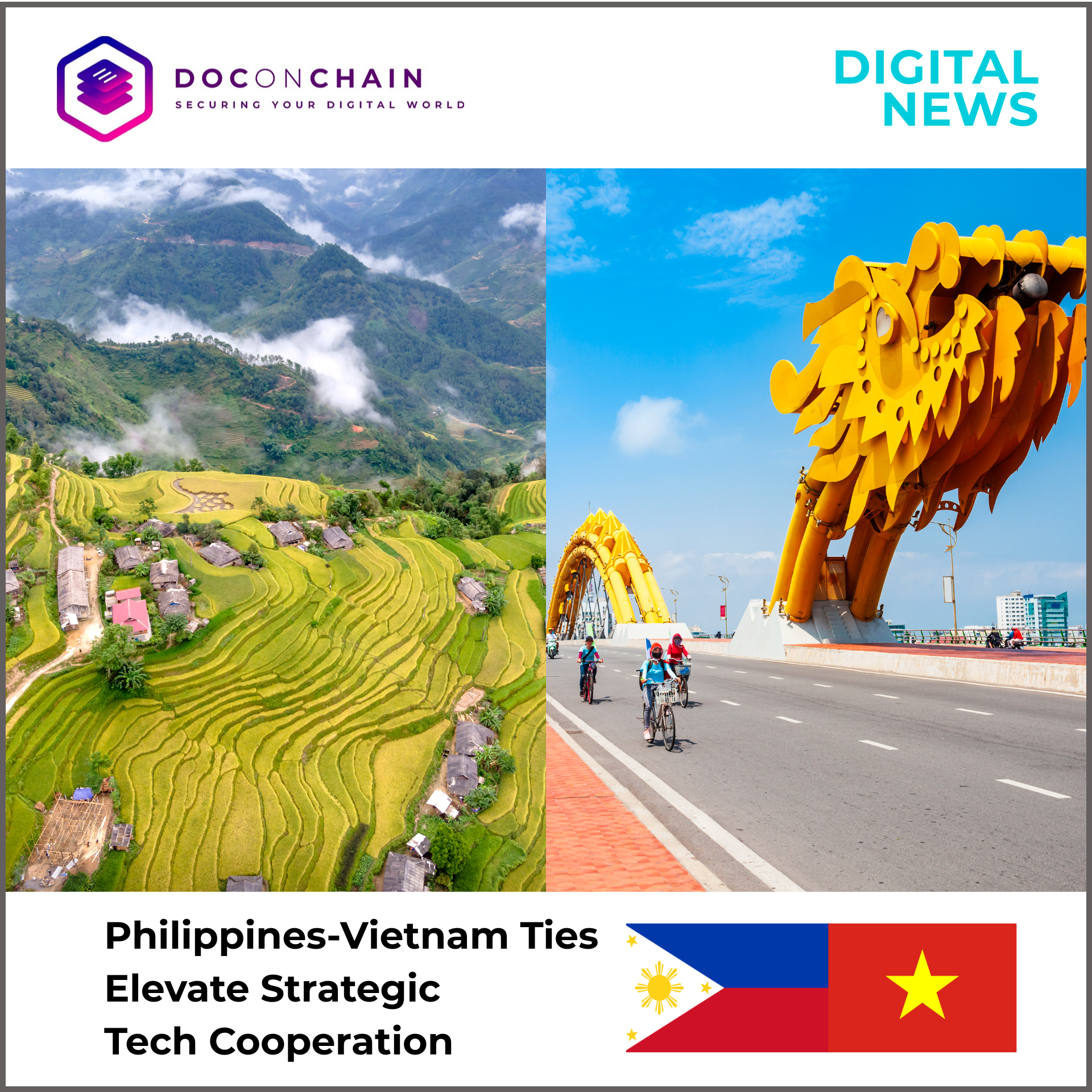
The Philippines and Vietnam signed a foundational memorandum to accelerate public e-government, digital inclusion, and critical emerging technologies. This bilateral partnership establishes a unified defense against severe cross-border cyber threats while building robust, data-driven frameworks for regional economic resilience.
---
Geopolitical stability increasingly depends on structural digital resilience. The recent bilateral agreement between the Philippines and Vietnam establishes a blueprint for regional modernization, combining regulatory alignment with technological innovation to secure cross-border data ecosystems while addressing rising sovereign cyber threats to create an integrated, high-efficiency digital economy.
Bilateral Leadership Shapes Emerging Tech Frameworks
During a historic state visit on June 1, 2026, Philippine President Ferdinand Marcos Jr. and Vietnamese President To Lam presided over the formal exchange of a Memorandum of Understanding on Information Technology and Digital Transformation Cooperation. Signed directly by Philippine Information and Communications Secretary Henry Rhoel Aguda and Vietnamese Minister of Science and Technology Vu Hai Quan, the agreement establishes an Enhanced Strategic Partnership. This structural alliance focuses on accelerating e-government deployment, widening digital inclusion, and harmonizing deployment standards for next-generation systems like blockchain, artificial intelligence, and the Internet of Things across Southeast Asian economic sectors.
Constructing Joint Defenses Against Cross-Border Threats
A primary catalyst for this bilateral integration is the urgent requirement for enterprise-grade security structures capable of neutralizing sophisticated, transnational digital liabilities. President Marcos highlighted the critical necessity of an integrated regional front to combat systemic challenges, including large-scale internet fraud, identity exploitation, and illicit data networks. By formalizing accelerated intelligence-sharing mechanisms and institutionalized law enforcement coordination, both countries are moving away from reactive perimeter defense. They are building a proactive, sovereign intelligence architecture that ensures immutable data integrity and protects critical document ecosystems from highly sophisticated cross-border exploitation.
Standardizing Digital Infrastructure for Economic Scale
Beyond immediate defensive security protocols, the intergovernmental alliance directly advances the broader goals of the ASEAN Digital Master Plan. Both nations are actively collaborating to institutionalize strict data center regulations, unified AI governance models, and cross-border data transmission protocols. This structural alignment reduces operational friction for enterprise institutions operating within the region, particularly those managing high-stakes document ecosystems in banking, insurance, and manufacturing. Standardizing these architectural frameworks enables businesses to minimize regulatory compliance risks, optimize document workflow efficiencies, and securely deploy real-time intelligence networks across international jurisdictions with absolute cryptographic certainty.
Looking Forward
The intergovernmental focus on blockchain and AI deployment reinforces the commercial reality that future enterprise profitability belongs exclusively to organizations utilizing verifiable data integrity and real-time intelligence networks.
---
SOURCE
PH, Vietnam expand cooperation on defense, trade, digital transformation
Inquirer.net Website
(June 1, 2026)